
License #B10503801
Commercial Security · Blog

Benefits of 24/7 Alarm Monitoring for Dallas Businesses: What It Actually Delivers and What to Look For

A locksmith-written walkthrough on getting a snapped key out of any lock — what to avoid, what works, and when it makes sense to call a pro.
Published May 11, 2026
TXP Security Team
Businesses and commercial properties in Dallas and the surrounding areas face a long list of security challenges. Vandalism, burglary, break-ins, trespassing, unauthorized access, inventory theft, and the everyday liability that comes with running a building where employees, customers, vendors, and contractors are always in and out. A locked door and a basic alarm panel are not enough anymore.

24/7 alarm monitoring exists to close those gaps. If installed and monitored by professionals, it gives you real eyes on the property when no one is there, fast response when something happens, and the kind of documented record insurance companies, attorneys, and police actually pay attention to. If executed poorly, it gives you a sticker on the window and a number to call when you discover the break-in the next morning.

This guide walks you through what 24/7 monitoring actually delivers, why off-hours coverage matters more than people realize, the top five benefits that matter in the real world, the red flags that mean you are paying for monitoring you will not get when it counts, and how to evaluate a monitoring company before you sign anything.
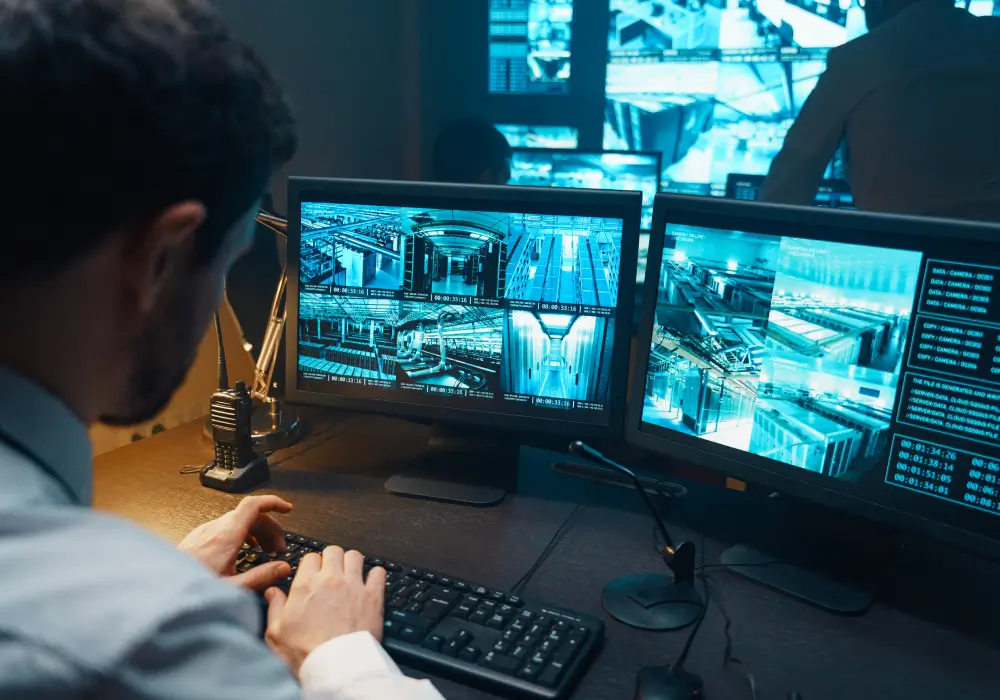
Alarm monitoring for Dallas businesses

What 24/7 alarm monitoring actually means for a business

Plenty of companies sell “monitoring.” Not all of them mean the same thing by it.

Here is how it actually works. An alarm event happens at your property, a door is forced open, a window breaks, or someone moves through a zone after hours. The alarm panel picks that up and sends a signal to a central monitoring station over cellular, internet, or both. A trained operator at the central station receives the signal, follows a verification process to confirm what tripped and why, calls the property contact list, and if needed, dispatches police, fire, or medical to the building.

What separates a strong monitoring station from a weak one is what happens during those next 60 seconds. A strong station has multiple backup locations, backup power, fast operator response, and trained staff with the authority to make real decisions. A weaker station keeps you waiting on hold when you call to test the system, runs operators through rigid scripts, and does not give them the authority to make real decisions.

That difference does not show up on the contract. It shows up at 3 AM when an alarm trips and you need the support the most.

Why off-hours coverage matters more than people realize

It’s when the property is empty that the hours start to count. When the building is closed, the lights are off, and there is no one inside to notice if something is wrong, those are the hours that test how well a commercial property is prepared to handle incidents such as theft, vandalism, and unauthorized entry, and whether the security in place actually does its job.

Weeknights, weekend mornings, long holidays, and the days around major events in the city are all windows where the preparedness of the property and the efficiency of the security system get tested. For example, construction sites tend to be exposed in the initial weeks before fencing, lighting, and gate access are fully sorted out, and that is something every Dallas contractor working on a new site already knows.

The point is simple and straightforward. If your only protection during off-hours is hoping no one is paying attention to the building, you really need to do something about it.

Top Five Benefits of 24/7 Commercial Alarm Monitoring in Dallas, Texas

In our experience, the following are the top five benefits we have watched make a real difference for Dallas businesses over the years.

1. Visible deterrence that stops crime before it starts

Most people looking to steal or vandalize are not professionals. They are opportunists, and they pick the property that looks like the easiest target on the block. A visible alarm panel, a yard sign from a known monitoring company, security cameras at the entry, and a window decal often move them along to the next building. And if they do try the door, a loud commercial alarm in an enclosed space tends to send them running before they get to anything valuable.

2. Real-time alerts on the device you actually use

When something trips, you get an alert on your phone within seconds. You see what happened, when, and where. You can pull up the camera feed live, call the contact list yourself, or let the central station handle it. You are not finding out the next morning when you unlock the building.

The biggest advantage is that you know what is happening in real time, even when you are not on site. A door forced open after hours, motion in a restricted area, someone lingering near the loading dock late at night, these are the kinds of situations where getting an alert immediately can prevent theft, damage, or a much larger issue the next morning.

3. Remote access from anywhere

Modern systems let you arm and disarm the property, check camera feeds, manage settings control smart locks, and review event history from any device. That is a powerful advantage. We have had clients handle situations from a beach in Mexico, from a hospital room, and from a parking lot in another state. That is the value of remote access. The property stays under your control no matter where you happen to be.

4. Video-verified alarms that cut false alarms and speed up police response

A traditional alarm tells the police that something tripped. A video-verified alarm sends actual camera footage along with the signal, so the responding officer can see whether it is a real person on the property, a stray cat, or a tree branch in the wind. Video verification confirms that the threat is real and allows the dispatchers to prioritize real emergencies, reducing the incidents of false alarms, and avoiding costly penalties. Visit our Video Verified Alarms page for more on how that works.

5. Backup that keeps working through power and internet outages

Most buyers do not think about this one until it has cost them. A properly designed commercial alarm system runs on cellular backup with battery support, which means it stays online when the building’s power or internet goes down. Storms, blackouts, and cut lines are exactly the conditions a serious criminal looks for. A monitored system designed correctly does not care about any of it.

Different industries, different security challenges

Retail, restaurants, warehouses, offices, schools, and clinics are all different worlds when it comes to security. Picking a one-size monitoring plan off a sales sheet is one of the bigger mistakes we see business owners make, because the realities on each of these properties look nothing alike.

Retail and restaurants struggle with after-hours break-ins, employee theft, and the constant risk of forced entry through back doors and storage areas. Warehouses struggle with perimeter exposure, dock-door theft, and high-value inventory loss that can wipe out a quarter of margin in a single night. Office buildings worry more about unauthorized after-hours access, especially in multi-tenant buildings where keys and cards float between vendors. Schools and houses of worship deal with everything from vandalism and trespassing to more serious issues where every minute of delay matters. Clinics and medical offices have to think about controlled substances, patient records, and HIPAA-related liability that turns even a small break-in into a nightmare.

A monitoring company that has worked with many types of properties understands these realities. So when you are evaluating options, ask whether the company has hands-on experience in your specific space.

Need 24/7 Alarm Monitoring for Your Dallas Business?

Local licensed technicians serving Dallas, DFW Metro, and the surrounding areas. UL-listed monitoring through C.O.P.S. No long-term contracts. Free on-site walk-through.

What separates serious commercial monitoring from the rest

A serious commercial monitoring setup runs through a UL-listed central station. UL stands for Underwriters Laboratories, and the listing means the central station has been independently audited for staffing, response times, backup power, redundancy, and protocol. UL-listed stations are required to have backup locations, so if one center loses power or connectivity, signals route to another within seconds. Most commercial insurance providers require UL-listed monitoring for premium discounts on commercial policies.

At TXP Security, all our monitoring runs through C.O.P.S. Monitoring, one of the largest UL-listed central station providers in the country, with redundant locations across the United States. We pair that with the Alarm.com platform for mobile control, video verification, and integration with the rest of the security system. We also offer no-contract monitoring options. Long-term contracts have always felt like the wrong way to keep a customer, so we choose not to use them.

How to evaluate and choose an alarm monitoring company in Dallas, TX

If you are shopping for a new provider or thinking about switching, this is your checklist:
  • Verified UL-listed central station, not just “we partner with monitoring”
  • Redundant central station locations, and the company can tell you where they are
  • Written response-time commitment in the contract
  • Video-verified alarm capability available
  • Month-to-month or no-contract options, not just multi-year locks
  • Licensed Texas technicians on staff, not subcontractors
  • Local phone number with a real person on the other end
  • Texas DPS license number listed publicly on the website

Multi-site businesses and growing operations

If you run more than one location, or you are planning to scale, the monitoring choices you make today affect every site you add tomorrow. A good commercial system lets you manage every property from one login, with one billing relationship, and one point of contact. Adding a new site should be a phone call, not a project.

We design systems on the assumption that the business will grow. A second restaurant, a third warehouse, a satellite clinic, all of it should drop into the same platform without forcing you to start over.

A tip from our security experts

Before you sign with any monitoring company, ask three things. Is your central station UL-listed? Do you offer video-verified dispatch? And do you require a long-term contract? The answers tell you almost everything you need to know about whether the service will be there at 3 AM. And if a company can’t answer those questions without looking it up, that is your answer right there. 24/7 alarm monitoring is one of the few security investments that pays you back through deterrence, insurance, response, and peace of mind. The trick is making sure the service you sign up for is the service you actually get.
TXP Security

Get Monitoring That Answers When It Matters.

Schedule a free on-site walk-through with a licensed TXP Security technician. We will review what you have, recommend what makes sense, and quote it on the spot. No obligation, no pressure, no long contracts for alarm monitoring services in Dallas, TX.

TPL
Written By
TXP Security Team
Texas DPS Licensed · License #B10503801

The TXP Security team consists of licensed technicians with real experience installing and managing commercial alarm systems, monitored cameras, access control, and 24/7 monitoring for businesses across Dallas and the DFW Metro. This guide reflects what our technicians see in the field, working alongside Dallas business owners who care about protecting what they have built.

Related Reading

Articles You May Find Useful

Service Areas

TXP Security Service Across the State

Call 866-322-9555

Frequently Asked Questions

How does 24/7 alarm monitoring actually work?

Your alarm panel sends a signal to a central monitoring station, where a trained operator verifies the event, calls the property contact, and dispatches police if needed.

Do I need 24/7 monitoring if I already have security cameras?

Cameras record what happened. Monitoring gets someone to respond while it is happening. Most commercial properties need both, working together, to actually prevent loss.

What is the difference between monitored and unmonitored alarms?

An unmonitored alarm makes noise and hopes someone reacts. A monitored alarm sends the signal to a central station that calls you and dispatches help if needed.

Will the alarm still work if the power or internet goes out?

Yes, if the system is set up correctly. Commercial systems run on cellular backup with battery support, so monitoring continues through power outages and internet failures.

How fast does the monitoring station respond when an alarm goes off?

A well-run UL-listed central station typically receives and acts on a signal within seconds. Verification and dispatch usually happen inside the first one to two minutes.

Can I keep my existing alarm system and just switch monitoring providers?

Most of the time, yes. We do a compatibility check on the panel, sensors, and wiring, and reprogram the system to report to a different central station.

What is C.O.P.S. Monitoring and why does it matter?

C.O.P.S. Monitoring is one of the largest UL-listed central station providers in the country, with backup locations across the United States and a long track record.

Do I need a long-term contract for 24/7 alarm monitoring?

Not with TXP Security. We offer no-contract monitoring options because we would rather earn your business each month than tie you into a multi-year agreement.