
License #B10503801
Commercial Security · Blog

Benefits of Commercial Security Cameras in Dallas TX

A guide from Dallas security experts on what commercial security cameras actually deliver, where most setups fall short, and how to choose a camera system that earns its keep.
Published May 27, 2026
TXP Security Team

A well-placed camera does more than record what happens inside your Dallas business. It actually changes the outcome. The moment an angry former employee, a stranger circling the parking lot, or someone testing door handles at the back of the building sees a high-resolution dome facing them, they think twice before going any further, and most of the time, they move on to a building that looks easier. That kind of deterrence is one of the strongest reasons commercial security cameras have become a standard expectation for shops, warehouses, clinics, restaurants, and office buildings across Dallas, from Deep Ellum to Far North Dallas and the surrounding metroplex.

The right camera setup, integrated with your access control and intrusion alarm system, gives you eyes on inventory, evidence when disputes arise, lower insurance premiums, and a workplace where people behave better because they know they are being recorded.

This guide walks through what commercial cameras actually deliver for a Dallas business, the nine benefits that matter most in the real world, the red flags that mean you are looking at a system or installer that will let you down, and a tip from our installers on what most business owners overlook.
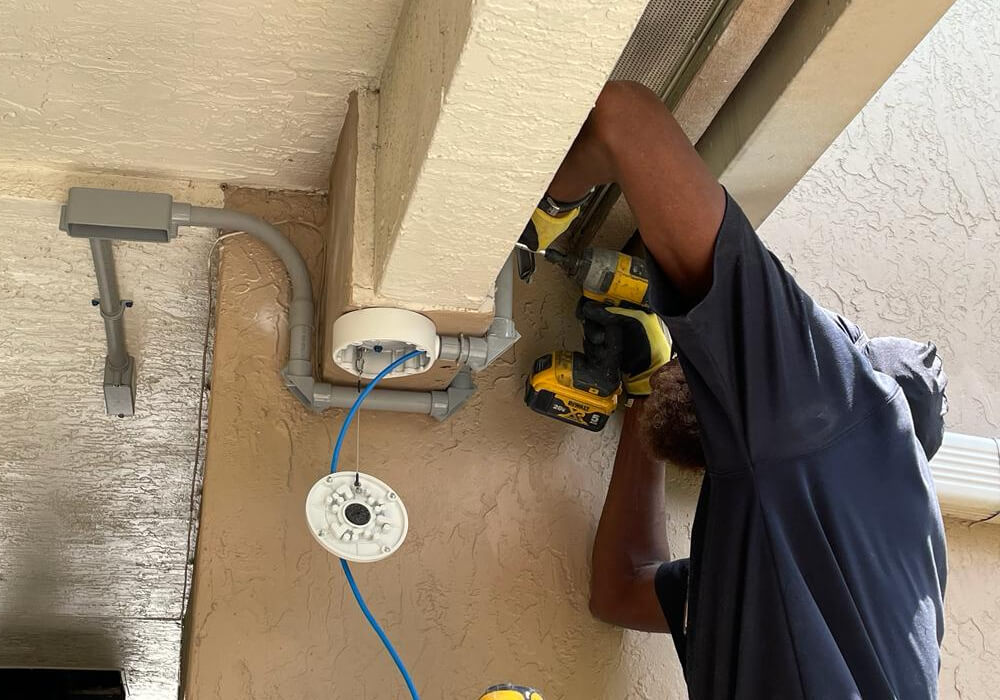
Technician installing commercial security camera in Dallas

What commercial security cameras actually do for a Dallas business

A consumer-grade camera bought from a big-box store and pointed at a back door is not a commercial security system. It is a recording device with a Wi-Fi connection. Here is what a real one looks like in practice. A door opened after hours pulls up the camera clip. A motion alert in a restricted zone pushes a live view to your phone in seconds. A forced-entry signal sends video straight to the monitoring station for verification. Without that coordination, you end up with a row of cameras nobody looks at until something goes wrong.

A real commercial camera setup is designed around how your property operates. Where cash gets handled. Where deliveries come in. The blind spots between the parking lot and the entry. How close the stockroom door sits to the back office. Footage gets captured at HD or 4K resolution, stored long enough to be useful, and pulled up from a phone or browser whenever you need it. The whole setup integrates with your alarm panel and access control, so one event triggers the right response across all three.

Why Dallas businesses invest in commercial cameras

Every business in Dallas deals with different security challenges, but the reasons behind them usually come down to the same few things. Things like property layout, business hours, who has access to which areas, and what is sitting in the building after closing. Here is how that plays out across the kinds of businesses we work with most often:
  • Retailers in Uptown and Knox-Henderson lose margin to shoplifting and internal shrinkage that adds up quietly over the course of a quarter
  • Warehouse operators near I-35 and the South Dallas industrial corridor worry about after-hours intrusion, pallet theft, and dock-door exposure
  • Restaurant owners in Deep Ellum and Bishop Arts deal with cash-handling concerns, customer disputes, and late-night break-ins through back entries
  • Office managers in Far North Dallas and Las Colinas need visibility on visitor flow, vendor access, and the equipment that walks off when no one is watching
  • Construction site operators across DFW need eyes on copper, tools, and machinery long after the crew has clocked out for the day
  • Clinics and medical offices have to think about controlled substances, patient records, and HIPAA-related liability that turns a small break-in into a serious problem
A camera system designed for the specific risks of each of these properties does work that hiring more staff cannot. It runs around the clock without getting distracted, and it gives you a record that holds up later, whether you are talking to the police, your insurance company, or a lawyer.

Top Nine Benefits of Commercial Security Cameras in Dallas, Texas

After years of installing commercial camera systems across Dallas, here are the nine that consistently matter most to the clients we work with.

1. Visible deterrence that stops problems before they start

Knowing that a place is being watched and monitored is enough to deter most people from attempting a crime. Threats to your business can come from anywhere. A resentful former employee who wants to damage your reputation, opportunists who pick the property that looks easiest on the block, or a burglar looking for a window to slip through. A visible camera at the entry, a dome over the parking lot, and a sign near the back door listing the security company move most of them along to a different building. Cameras with AI features such as facial recognition add another layer of deterrence, since nobody wants their face on file.

2. Real-time visibility from any device

Commercial surveillance comes equipped with advanced features such as AI, motion detection, and remote access that allow for real-time monitoring from anywhere. Whether you are away from the business site or running multiple locations across the metroplex, you can see what is happening through a mobile app or browser dashboard. Useful features that come with a properly designed system include:

  • Live HD video streams from indoor and outdoor cameras
  • Two-way audio so you can speak through the camera when needed
  • Motion-triggered notifications with instant clip previews
  • Night vision and low-light performance for overnight coverage
  • Night vision and low-light performance for overnight coverage

Nobody expects you to watch the feed all day. But when your phone buzzes at 9:47 PM, you can pull up the live view in seconds and see what is going on.

3. A safer environment for employees and visitors

Cameras placed at strategic points including the entrance, hallways, stairwells, basements, and parking lot send a clear message to everyone who works at or visits your property. Employees feel safer arriving early and leaving late. Visitors notice the care you have taken. In a retail or service business, this often shows up as stronger customer trust and steadier foot traffic, especially after dark, when people pay closer attention to where they feel safe.

4. Workforce accountability without micromanaging

A camera system is not about watching every keystroke or treating staff like suspects. It is about having a record when something goes wrong. If a heated argument breaks out, if a customer interaction needs to be reviewed after a complaint, or if an HR question comes up about workplace behavior, footage gives you facts instead of conflicting stories. Most teams settle into a calmer environment once cameras are in place.

5. Tighter visibility on restricted areas

You may not want every employee to access every area of your property. Even with access control systems such as biometric locks, card readers, or master key systems, an employee may still find a workaround. They tailgate a coworker through a secure door, prop a back entrance open, or share a credential they should not be sharing. A camera positioned near server rooms, stockrooms, executive offices, or any other sensitive zone gives your team a visual record of who actually went in, when, and with whom.

6. Reduced inventory shrinkage

For retailers and warehouses, shrinkage quietly eats profit month after month. Sometimes it is shoplifting. Sometimes it is internal theft. Most of the time, it is both. The hospitality industry deals with the same problem in a different form, with smaller items disappearing in volumes that add up fast. Installing a high-definition camera system along with live monitoring is one of the most effective ways to get ahead of it. We have had clients tell us their shrinkage numbers dropped significantly within a few months of getting the right cameras in the right spots.

7. Lower commercial insurance premiums

Your insurance provider will often lower your premiums if you take precautionary measures such as installing commercial security cameras alongside a reliable monitored alarm system, since these setups reduce the risk of theft, break-ins, and other crimes. Ask your insurance broker what specific reductions apply when you add commercial cameras and integrated alarm monitoring to your property. For some businesses, the insurance savings alone cover a noticeable chunk of the system cost over time.

8. Hard evidence when something goes wrong

Commercial cameras with high resolution and HD features capture details clearly enough to actually help later. Some systems can even flag faces or license plates automatically, which becomes useful when police or insurance get involved. Clear footage often wraps things up fast instead of leaving the situation dragging on.

9. Seamless integration with the rest of your security stack

The latest commercial camera systems integrate directly with alarms and access control, so your team is not juggling three disconnected systems. A door forced open triggers a camera clip. A motion alert after hours pushes a live view to your phone. A monitoring station receives both the alarm signal and the video, so the operator knows whether to dispatch police or clear the event. That kind of coordination is where commercial cameras actually pay off.

Need Commercial Security Cameras for Your Dallas Business?

Local licensed technicians serving Dallas, DFW Metro, and the surrounding areas. HD and 4K commercial cameras integrated with access control and alarm monitoring. No long-term contracts. Free on-site walk-through.

Red flags when choosing a commercial camera system or installer

Not every quote you receive is worth the price tag, and not every installer in this market does work that holds up. Watch for these warning signs before you sign anything:
  • A one-size-fits-all proposal. If the installer has not walked your property, mapped your blind spots, or asked about your hours and workflow, the design will not fit your business.
  • No discussion of resolution, frame rate, or storage retention. A camera capturing grainy footage at three frames per second is not evidence grade. Ask about HD or 4K resolution, minimum frame rates, and how many days of recordings you can retain.
  • Cameras without integration. A system that cannot talk to your access control or alarm setup creates silos, missed alerts, and gaps that opportunists eventually find.
  • No mobile app, or a poorly rated one. Test the app before you commit. Slow video loading, constant logouts, or a clunky interface will frustrate you every single day.
  • Vague monitoring promises. If the company markets live video monitoring, ask whether the monitoring center is in-house or outsourced, how operators are trained, and what their response protocol looks like.
  • No clear support plan. Find out who answers when a camera goes offline at 9 PM on a Saturday. Response time matters more than the brochure.
  • No Texas DPS license number on the website. Any commercial security installer working in Texas is required to be licensed. If you cannot find the number, keep looking.
If an installer gets uncomfortable with these questions, that alone tells you something.

A tip from our security experts

After years of commercial installations across Dallas, one mistake comes up more often than any other. Business owners often over-invest in camera count and under-invest in placement strategy. Twelve cameras with poor angles deliver less protection than six cameras placed where activity actually happens.

Before any installer mounts a single dome, ask them to walk you through a sightline map of your property. Every entrance, exit, cash-handling area, stockroom door, parking lot lane, and loading bay should have at least one camera with a clean angle and no obstruction. If your installer cannot produce that map, the design has not been thought through. Without it, you end up with cameras that look impressive on the wall but miss what they are supposed to catch.

TXP Security

Get a Camera System That Earns Its Keep.

Schedule a free on-site walk-through with a licensed TXP Security technician. We will review what you have, recommend what makes sense, and quote it on the spot. No obligation, no pressure, no long contracts for commercial security cameras in Dallas, TX.
TPL
Written By
TXP Security Team
Texas DPS Licensed · License #B10503801

The TXP Security team consists of licensed technicians with real experience installing and managing commercial cameras, monitored alarm systems, access control, and 24/7 monitoring for businesses across Dallas and the DFW Metro. This guide reflects what our technicians see in the field, working alongside Dallas business owners who care about protecting what they have built.

Related Reading

Articles You May Find Useful

Service Areas

TXP Security Service Across the State

Call 866-322-9555

Frequently Asked Questions

How long do I actually need to keep camera footage?

By the time an inventory issue, employee complaint, or fraudulent claim gets noticed, footage is often already overwritten. For most Dallas businesses, 30 days is the minimum. Warehouses, medical offices, and higher-risk properties often keep footage longer. The right retention depends on your business, camera count, and how often footage gets reviewed after incidents.

How do I know if my current camera placement has blind spots?

Blind spots usually appear in the same places. Between the parking lot and building entry, behind the property near deliveries or trash pickup, and interior corners where poor angles leave coverage gaps. A licensed installer can usually spot them during a walk-through, and many times the fix is repositioning existing cameras.

Will my employees push back on cameras being installed?

Some will, which is fair. Be clear about what cameras cover and what they do not. Common areas, entries, stockrooms, and parking lots are standard. Bathrooms, break rooms, and private offices are not. Once employees understand the system protects the property and helps resolve disputes fairly, most concerns settle quickly.

Can a camera system actually help me catch internal theft, or just shoplifters?

Internal theft is often where cameras pay for themselves fastest. Shoplifting usually happens out in the open. Internal theft happens in stockrooms, cash drawers, back rooms, and loading docks, where many businesses have weak coverage. Cameras placed around these areas, combined with proper footage retention, often uncover problems that would otherwise stay hidden.