
When Your Dallas Business Alarm Goes Off, What Actually Happens Next?
It is late, the building is empty, and the alarm at your business goes off. A siren starts up and a signal heads out to a monitoring center. Most owners assume the rest takes care of itself.
It usually does, but not always the way they picture it.
A siren doing its job and help arriving quickly are two different things, and the space between them is where a lot of business alarm systems quietly come up short. Getting the alarm to sound is the easy part. What happens in the next few minutes depends on details most owners never think to ask about, and those details are the whole point of this post.
TXP Security designs and installs commercial security systems for businesses across Dallas and the wider DFW area. If you want to know your alarm is doing more than making noise after the lights go off, this is worth ten minutes.
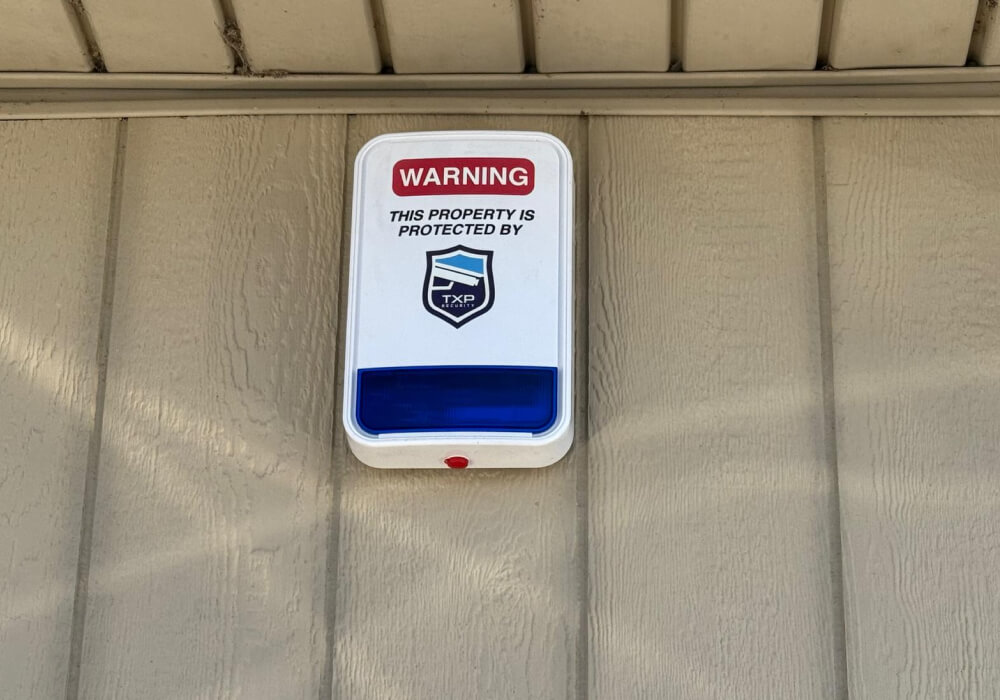
A siren is not a response
Here is roughly how it goes. A sensor trips and sends a signal to a monitoring center. The center runs its procedure, usually a phone call first to check whether it is real. What happens after that depends almost entirely on the quality of information riding along with the alarm. A signal that only says “something tripped somewhere” carries far less weight than one that can show what is happening.
On paper the system looks finished. In practice, that depends.
And this is the part owners rarely see, because on the ordinary nights when nothing is wrong, a thin response costs them nothing. It only shows the first time someone is genuinely inside.
So what actually gets you a fast, serious response?
- The permit. Many cities, Dallas included, ask businesses to register their alarm, and the requirements and fees are set locally and can change. Before you count on a police response, it is worth checking the current rules on the Dallas Police Department alarm information page or with your own city. This is a gap we often find on properties that have changed hands, where the alarm is still registered to the last tenant, or not registered at all.
- Credibility. An alarm that cries wolf loses standing over time. A panel that trips on wind, shadows, or the afternoon delivery trains everyone around it to treat its alerts as background noise, so when a real one comes through, it has already been discounted. That is where a lot of owners get caught out.
- Confirmation. This is the big one. Can the event be confirmed? An unconfirmed signal is a guess. A confirmed one is not. Everything after that gets faster the moment someone can say, with confidence, that this is real.
Why verification changes the whole picture
Verification just means being able to see what set the alarm off, instead of only knowing that something did.
This is where the equipment stops being a formality. A video verified alarm system links your sensors to cameras, so when a sensor trips, the system pulls up live or recorded video of that exact spot. An operator looks, sees whether a person is actually there, and handles it accordingly instead of forwarding a signal nobody can vouch for.
Once someone can confirm what is happening, everything that follows moves differently, and you skip the wasted trips that come from chasing shadows. From what we see in the field, verification is the line between a system that records what already happened and one that can get help moving while it still matters.
For higher-risk sites, live video monitoring takes it further. Trained operators watch key areas after hours and use talk-down speakers to warn someone off before things escalate, and on plenty of nights that ends it right there, before anyone else is even needed. Our guide to 24/7 alarm monitoring for Dallas businesses covers how that overnight coverage works.
There is a quieter benefit too. You end up with a clear record of what happened rather than a vague log, which counts for a lot when you are dealing with an insurer, or just trying to work out how someone got in.
Not sure whether your alarm and cameras would actually confirm a break-in? A licensed TXP Security technician can tell you in a single visit.
When your cameras and alarm have never met
Here is where a lot of otherwise decent systems fall apart.
The camera system and the alarm went in at different times, by different people, with no real connection between them. The alarm trips on one wall while the cameras record quietly on another, and nothing links the two together. So when the moment comes, nobody can pull up the right video fast enough to confirm anything.
We have walked into buildings where the alarm and the cameras had never once spoken to each other. Both worked. Neither helped the other.
A system that can verify is one where the sensors and cameras were built to work together from the start, so a tripped sensor points straight to the footage that shows what caused it. When we survey an existing property and find the two running as separate islands, that is usually the first thing worth fixing, and it rarely means scrapping what you already own.
Access control belongs in the same picture. A lot of after-hours entries come down to a door that should have been locked, or a credential that should have been shut off months ago. We see it constantly. The alarm works, the cameras work, the access control works, but each piece is off doing its own thing. Connect them and they start backing each other up instead of running as separate systems, which is the whole idea behind an integrated commercial security system.
Two things worth checking
One, is your alarm registered the way Dallas requires, current, and in your business’s name rather than a previous tenant’s? Two, ask your monitoring provider a plain question. When the alarm trips at 3 a.m., can anyone actually confirm what is happening before they decide what to do, or do they just forward the signal? If it is the second, you have a system that raises an alert, not one that brings help.
Both are a phone call. Together they tell you most of what you need to know.
A few more worth sitting with:
- Is your alarm registered correctly, and in your name?
- When it trips after hours, can anyone see what set it off, or only that something did?
- Are your cameras and alarm one connected system, or two that were installed years apart?
- Does the system trip on nothing, and if so, has anyone tuned it lately?
Find out whether your alarm brings help or just raises an alert
Frequently Asked Questions
Does a loud alarm mean someone will respond quickly?
Does my business alarm need to be registered with the city?
Many cities, Dallas included, ask businesses to register their alarm, and the requirements are set locally and can change. Check with your city before you count on a police response. If you are not sure where you stand, a TXP Security technician can help you sort it out.