
Synagogues, Temples, and Jewish Community Facilities
Synagogue Security Systems
- Access control, cameras, intrusion detection, and duress devices
- Free on-site security assessments, written to support grant applications
- Installation planned around services, classes, and the High Holidays
- 24/7 alarm monitoring through C.O.P.S. Monitoring’s UL-listed central stations
Request a security assessment for your congregation.
No obligation.
Synagogue Security System Installation and Monitoring
TXP Security installs security systems with professional monitoring for synagogues, temples, religious schools, and Jewish community facilities. We work directly with congregations throughout Texas and with licensed local contractors for installations in other states.
Security concerns do not always begin with an emergency. Did the side door by the religious school close after the last class? Who is waiting at the main entrance when one person is in the office? Why is that vehicle still in the parking lot after closing? We design and build the system so staff can check these things quickly, and so there are clear records if a more serious incident occurs.
Some congregations also run a school, camp, second campus, or shared building. Where the system supports it, these locations can be managed through one account with separate access and recording permissions.
Some congregations already have a facility assessment from their federation or the Secure Community Network. We work alongside that, adding the equipment plan, the compatibility review, and the project costs that turn those recommendations into a working system.
Grant-Funded Projects
Security Grants and the Required Documentation
Many congregations use the Nonprofit Security Grant Program or another state or local grant to pay for security improvements.
For the NSGP, the vulnerability assessment explains the risks at the property. The investment justification explains what the congregation wants to do about them and how the requested equipment will help. The information in both documents must match.
Applications are submitted through the State Administrative Agency rather than directly to FEMA. Each state sets its own deadline and may ask for additional information, and we work to whatever your state requires. If the approved amount is lower than what your congregation requested, we help you decide which improvements should be completed first and which ones can wait.
Program requirements, eligible costs, procurement rules, and deadlines vary by funding year and by state agency. We support the application. The decision rests with the reviewing agency.
What TXP Security Provides
Documentation Built for the Application
- Written vulnerability assessment
- Investment justification support
- Itemized equipment and labor costs
- Revised scope if the award is lower
- Installation planned within the approved project period
Controlled Entry
Access Control for Synagogues
A synagogue is used differently through the week. It may be closed one day, open for services or classes the next, and staffed during office hours in between. The access system has to follow that schedule while still giving staff a simple way to admit a visitor or a delivery.
We also look closely at the doors themselves. Older or oversized sanctuary doors may need different hardware than standard doors.
Locking a door from the outside does not lock anyone in. The hardware, the schedules, and any lockdown function are set up so that required exits still open from the inside, and so the building meets the fire, building, and accessibility requirements that apply to it.
Credentials by Role
Fobs, cards, or mobile credentials, with access set separately for the office, clergy, maintenance, and the security committee.
Video Intercom and Release
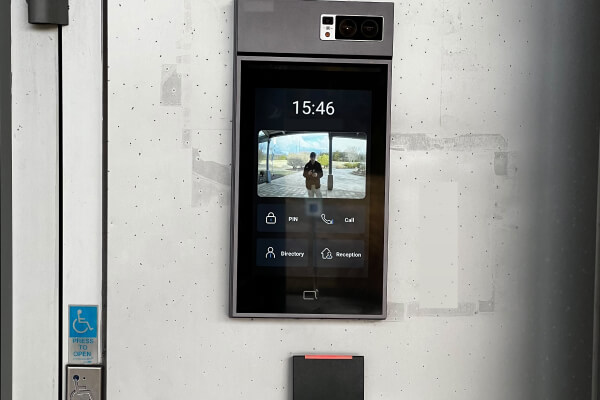
A camera and intercom at the main entrance let staff see and speak with whoever is outside before unlocking the door.
Scheduled Locking
Doors unlock for services and classes on a schedule. Holiday schedules override the weekly settings, so staff do not adjust them by hand.
Access Records
Each use of a credential is recorded, so staff can check which credential opened a particular door, and at what time.
Not every door needs all of this. Which doors get what depends on how the building is actually used, so we work that out during the site visit.
Camera Coverage
Security Cameras for Synagogues
Interior cameras require more careful placement. Unless the congregation requests sanctuary coverage, cameras can remain focused on entrances and corridors.
Approach and Parking
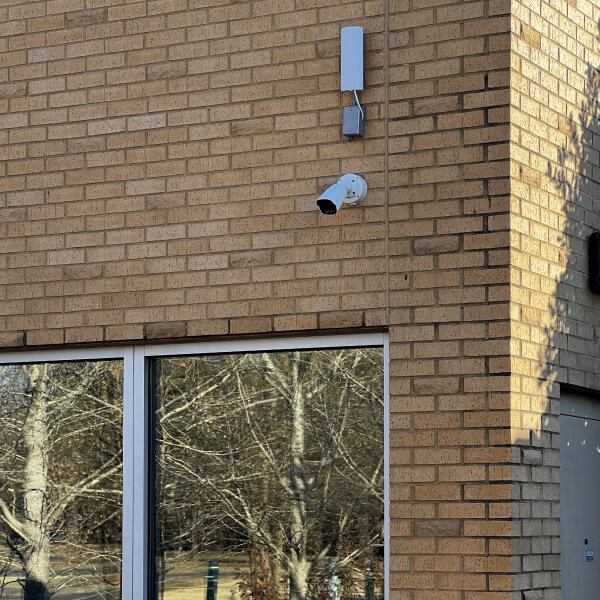
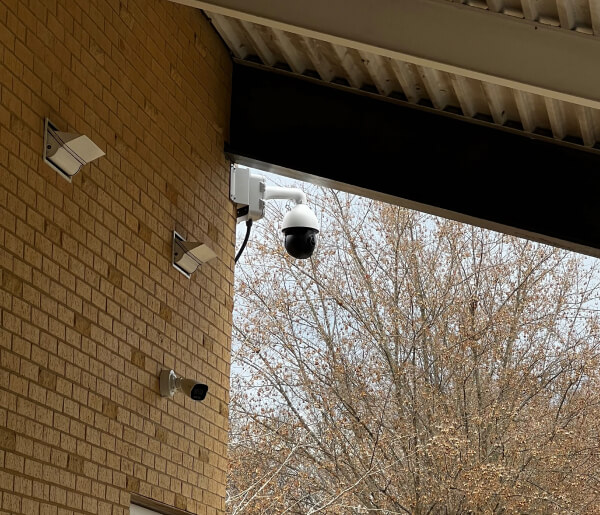
Cameras covering vehicle entrances, parking areas, and the walk from the lot to the doors.
Entrances and Interior
Recording and Retention
Working With What Is Already There
Integration and System Takeovers
Before replacing anything, we check the alarm, cameras, intercoms, gates, and door hardware already in place. We identify what can be reused, what needs an upgrade, and what should be replaced, ahead of the final scope. What matters more than age is whether the manufacturer still supports the equipment and whether the existing cable can carry what you are adding, since pulling new cable through finished walls is usually the expensive part of the job. If your committee is choosing between a full replacement and a phased upgrade, start with what to check before replacing any of it.
Alarm System Takeovers
We test the panel, communicator, sensors, and wiring first. Parts that are working properly stay in place unless the takeover requires a change.
Cameras and Recorders
We review the cameras, recorder, storage, and manufacturer support. Equipment that can provide the coverage you need does not have to be replaced.
Gates, Intercoms, and Doors
We inspect the controls at each gate and entrance before work begins, then decide what can remain in service and what needs an upgrade.
Watching the Property After Hours
Live Video Monitoring and Operator Response
Friday evening and Saturday morning are often the busiest the building gets, and it can sit quiet for long stretches midweek. Monitoring is scheduled around that calendar, including overnight hours, closed days, holidays, and other times when the property needs coverage.
When the cameras detect activity during those hours, an operator reviews the live video. The operator can speak through a speaker at the property and, if the activity continues, follow the response instructions established with your congregation. Analytics help separate people and vehicles from animals and weather, so operators are looking at activity that matters.
Intrusion and duress alarms remain monitored around the clock through the central station.
Detection and Duress
Monitored Intrusion Detection and Duress Devices
Intrusion detection protects the building when it is closed, and it can also secure unused areas while staff or classes are present elsewhere. Duress devices serve a different purpose. They let an authorized person ask for help discreetly when a threatening situation develops inside or near the building. Stained glass and other specialized glazing must be reviewed before glass-break sensors are selected.
Door and Window Detection
Contacts on exterior doors and accessible windows, with glass-break sensors where the type and location of the glass make them suitable.
Interior Detection
Motion detection along corridors, in the office, and on the routes between the education wing and the sanctuary after hours.
Separate Alarm Areas
One part of the building can remain armed while another is in use, so classes and evening services do not depend on the same schedule.
Silent Duress
Fixed buttons at reception, in the office, near the bimah, or wherever the assessment identifies, with wearable pendants as needed.
Many congregations already have people watching the building, whether that is a volunteer security committee or off-duty officers during the High Holidays. The system is set up around those people rather than separately from them. Duress devices go to whoever is actually stationed at the entrance, including greeters, and camera access can be given to specific members of the security team without opening the full system to everyone.
The response process is agreed upon with your congregation and tested before handover, so everyone knows who receives the signal, what information is sent, and when local authorities are contacted.
Start With the Building
Not Sure Which Part to Handle First?
That is what the assessment is for. We walk the property, document the findings, and arrange them by priority so your board can decide what to address first.
24/7 Monitoring and Privacy
Alarm Monitoring, Access, and Privacy
- A call list you update when board members, staff, or authorized contacts change
- Separate response instructions for a duress signal and a door alarm at two in the morning
- Individual administrator accounts, so changes can be traced to a person
- Access removed when a staff member, board member, or volunteer leaves a role
- Multi-factor authentication where supported for administrator and remote-access accounts
- Recording storage and retention planned around your congregation’s needs
Working With Congregations
Why Congregations Choose TXP Security
We make it easier to understand what your building needs, what the work will cost, and how the system will be managed.
Work Around Your Calendar
Installation is scheduled around services, class hours, and the periods when the building is busiest, with dates agreed in advance.
Clear Proposals and Costs
Your board receives a clear scope of work and an itemized cost breakdown that can also support a grant application.
Tested and Documented
We test the doors, cameras, alarm areas, and duress devices, confirm the call lists, and train your staff. The setup is documented for the next committee.
Your Information Stays Private
We do not identify congregations, publish building photographs, or share equipment locations without written permission.
Where Projects Start
Security Assessments for Synagogues
Every project begins with an on-site visit, because a floor plan cannot show how a building actually gets used. A room that holds two hundred people on Friday evening sits empty on Wednesday. We also look at doors used differently during High Holidays, overflow services, school pickup, and community events. You receive written findings arranged by priority, with estimated cost ranges, at no charge.
- Building use on service days and weekdays
- Doors used for services, school, staff, and deliveries
- Areas where staff may be working alone
- Existing cameras, locks, emergency egress, and alarm equipment
- Lighting at entrances, parking areas, and walkways after dark
Plan for What Comes Next
Schedule a Security Assessment for Your Congregation
If your congregation is preparing a grant application or wants to know which security improvements should come first, start with an on-site assessment. If you are working toward a grant deadline, let us know when you contact us so we can plan the assessment and documentation around your timeline.
Grant documentation support
C.O.P.S. UL-listed monitoring
Congregation Questions
Questions About Synagogue Security
Do we need another assessment if our federation did one?
Usually not. If the assessment is current, we review it and use it as a starting point. Our site visit confirms the existing equipment, checks compatibility, develops the system scope, and adds current costs for the work being considered.
Who manages the system after it is installed?
Your office, in most cases. Authorized staff can issue or remove credentials and adjust regular schedules through the system’s administrative tools. We set up individual administrator accounts, train your team, and remain available for service and future system changes.
Can we keep the cameras and equipment we already have?
Often, yes. We check the equipment’s condition, image quality, manufacturer support, cybersecurity, and compatibility, along with the existing cabling and storage capacity. What still works well stays in place, and if something should be replaced we explain why.
What happens if the power or internet goes out?
The alarm panel runs on battery backup and reports over a cellular path, so monitoring continues when the internet is down. Cameras keep recording to local storage and footage uploads once the connection returns. We size the backup around how long your building tends to lose power.
What if our grant award is lower than we requested?
We revise the scope to fit the available funding. The improvements ranked highest in the assessment remain in the project, and the remaining work can be considered later if additional funding becomes available.
Will access control affect emergency exit from the building?
Properly designed access control secures doors from the outside without preventing people from leaving through required exits. The hardware and schedules are planned around the fire, building, and accessibility requirements that apply to the property.